
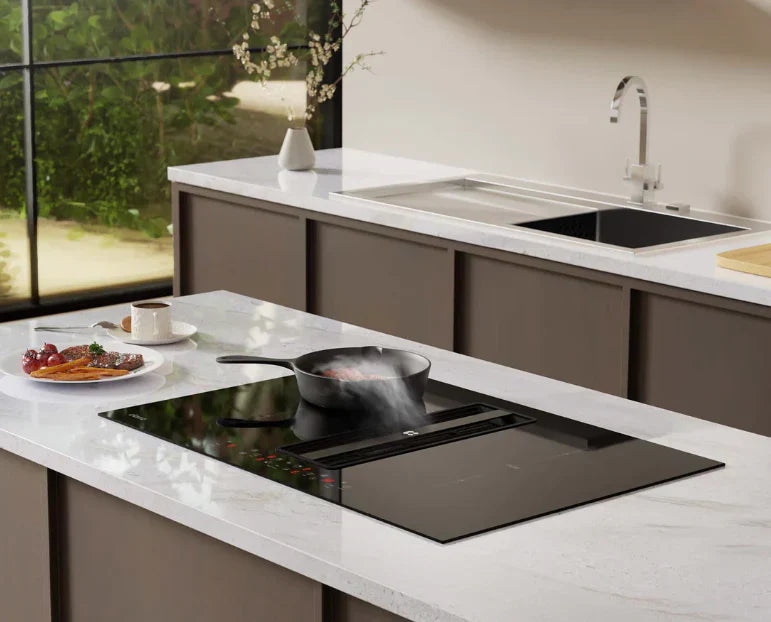
The End of the Cooker Hood? Why Venting Hobs Are Taking Over
For years, the cooker hood has been a standard part of almost every kitchen. You cook, steam rises, and the hood above your head does the work.
But that setup is starting to change.
More and more people are switching to venting hobs — and once you understand how they work, it’s easy to see why.
What is a venting hob?
A venting hob is exactly what it sounds like: a hob with a built-in extractor.
Instead of pulling steam and smells upwards into a hood, it draws them down directly from the cooking surface. The air is then filtered and either recirculated or vented outside.
So instead of having a separate extractor above your cooker, everything is built into the hob itself.
Why people are making the switch
The biggest reason is simple: convenience.
A venting hob removes the need for an overhead cooker hood completely. That means no bulky unit above your hob, and no need to plan extraction in the ceiling or wall above it.
It keeps things straightforward and integrated.
Do venting hobs actually work?
Yes — and in many cases, surprisingly well.
Because they extract steam at source (right where the cooking happens), they don’t have to wait for it to rise. That makes them very effective at capturing smells and vapours quickly.
Most models include:
- Strong built-in extraction fans
- Grease filters
- Odour filters (in recirculating models)
- Adjustable power levels depending on cooking
They’re designed for everyday cooking, from boiling and frying to more intensive use.
What you gain by removing a cooker hood
Getting rid of a traditional hood changes a few practical things in the kitchen:
- More freedom with where appliances are placed
- No overhead installation or ducting needed in many cases
- A simpler, less cluttered cooking space
- Easier cleaning (no hood panels or filters above head height)
It’s a more streamlined setup overall.
Things to keep in mind
Venting hobs are a great upgrade, but they’re not completely “plug and forget”.
A few practical points:
- They usually need space under the hob for the motor system
- Some models require external ducting, others use filters
- Filters will need cleaning or replacing over time
It’s worth planning for these before you buy.
Final thoughts
Venting hobs aren’t just a trend — they’re a practical alternative to overhead extraction.
They simplify installation, reduce visual clutter, and handle everyday cooking very effectively.
For many kitchens, they’re becoming the easier, cleaner option compared to a traditional cooker hood setup.
And that’s why they’re starting to take over.